DAD
2024, Single channel video, 11 min 58 sec
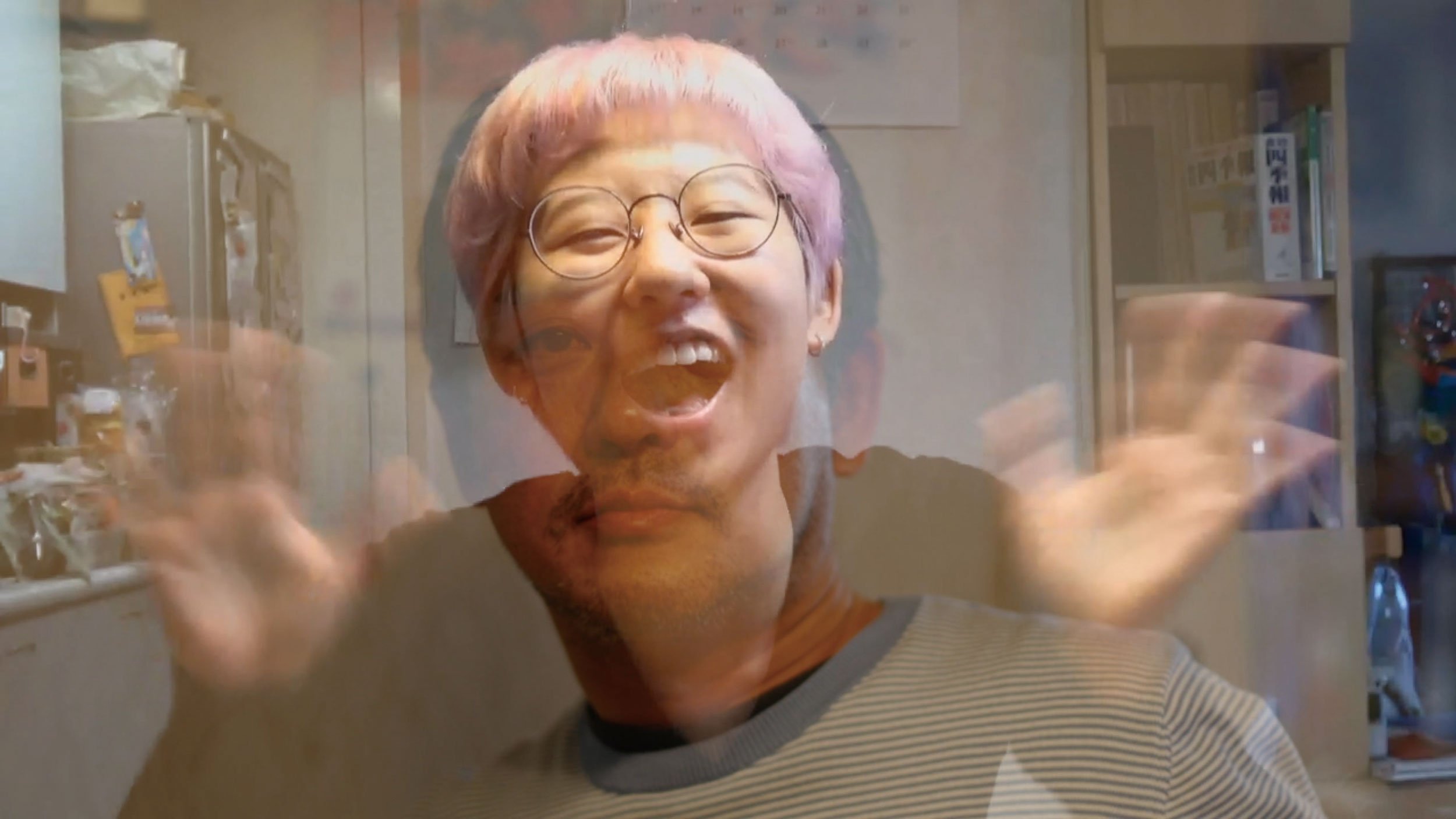
DAD, 2024, Video still
In this work, the artist relentlessly berates her late father, pouring out the domestic violence she suffered at his hands. Towards the end, she begins to repeatedly bid him farewell, waving her hand.
Through this accusation of abuse, the work exposes the distorted dependency with her perpetrator father, as well as the lasting trauma the family continues to carry even in his absence. It questions the violence of the patriarchal system within society and the pain inflicted on victims.
Furthermore, the work addresses the potential for aggression within the victim, acknowledging that victims possess a humanity that is not always "good" in a social context. By shattering the stereotyped image of the victim, the artist presents both "hope" and "reality."
My motivation for creating art is to explore what expressions emerge when trauma survivors engage in creative activities. For example, in my video work entitled, "Dad", I visualized my own experience of trauma and being a survivor. The artwork consists of overlapping images of myself and my father signifying the extreme closeness of our emotional distance. At the time I made this work, I was experiencing an illusion of being constantly watched by my deceased father, so I decided to directly incorporate that haunting image into the video. The overlapping images of myself the daughter and my father not only represent the emotional distance but also underscore the extreme state of patriarchy within the family. Japan's awareness of gender equality is lagging, and similar domestic problems are occurring throughout Japan. Through "Dad", I criticize the enduring problems of patriarchy, including domestic violence, and the current reality in Japan where individuals are forced to bear the consequences.
The video focuses on a performance exposing the domestic violence I suffered from my father. I was unable to defy my father while he was alive and accepted the violence. Regretting my inability to stop my father, in "Dad" I raise my voice against the image of the father. I call on viewers and society to recognize that domestic violence is a social problem that leaves victims with profound trauma. The intense expression evokes a latent empathy in viewers toward victims’ emotions and anger that usually only survivors can understand.
Another critical component of the work is in acknowledging the aggressiveness and human complexity of the victim. It is common to think of victims as pure and innocent beings without guilt or power. However, it is well-known that when victims expose their trauma, they become a threat to the social or personal status of the perpetrator, thereby embodying violence themselves. At this point, the roles of victim and perpetrator are completely reversed. Furthermore, because victims are burdened with trauma, it becomes difficult for society or the victims themselves to question the validity of their exposure or actions. I believe that society needs to recognize these important aspects of victims who have exposed their trauma. In "Dad", I vehemently curse my father. This act itself lacks legitimacy, as I understand the fundamental issue lies with the society that produced my violent father, not with my father himself. However, even if I have committed a wrongful act, my legitimacy as a victim remains intact, because victims are entitled to make mistakes as human beings.
Besides unpacking the complexity of trauma, "Dad" also serves as a personal means of liberation from my own traumatic experiences. In the final scene of the work, I wave goodbye to my father. However, contrary to my intention, the image of my father still overlaps with me. This successfully transforms the narrative into a "story without salvation" or "fiction," creating a form of substitution effect. This representation allows me to objectively view and reinterpret the potential trauma that I hold. By exposing my trauma and sharing my wounds with society, I find solace, and viewers are also able to confront their own emotional wounds and be liberated from trauma.